I Shall Ferment
Going beyond one's comfort zone

I SHALL FERMENT
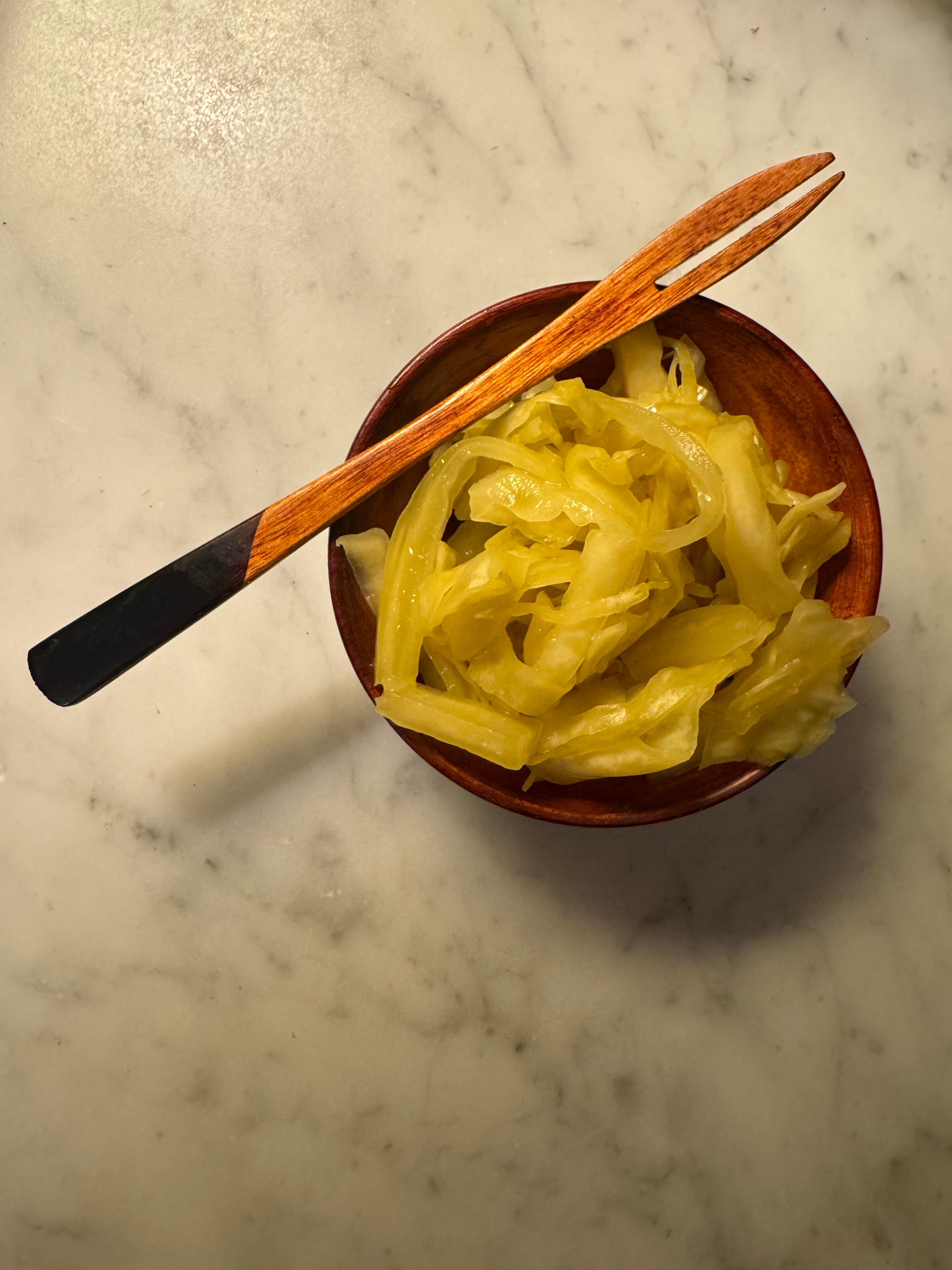
I just made my second half gallon of sauerkraut. I’m a little late to the party, but quite excited. I love to cook, but I am never home long enough from my travels to ferment something and look after it. This winter is an exception. I put up my first jar of turmeric sauerkraut to ferment mid-December. I was inspired by my friend Tim. He’s a honey-smith, or hive alchemist, slightly wild in the untamed sense, incredibly knowledgable, conscious human being. (He would say that we are all fermenting). He knows how to grow things, even chickens in the backyard and in the summertime, the front yard is full of sunflowers. You can’t even see the entrance to his house.. which might be a good thing. He was an intrepid traveler in the past, living in Egypt for 12 years and can relate in several languages if need be. Last year I tasted a batch of his turmeric sauerkraut that knocked my socks off. As a rowdy alchemist, I knew he was up to something. It was the most potent natural medicine I have ever encountered, the sort of jar of elixir that you want to keep in your fridge long after the kraut itself is gone. He had made a lot, so there was quite a bit of “the elixir” left over just for shots. I thought to myself that there is no reason not to be making it myself. So with a bit of ‘jen ne c’est qua’, I jumped in. He broke it down. It made my head spin and I fell into a funk when he started talking weights and salt percentages as we sat around the fireplace. I was lost. The next day, I gained my courage to try it out.
I spend my life in kitchens all over the world and yet, I had never tried my hand at this simple fermentation. I failed at sourdough starter during Covid. Or gave up, I don’t remember. Courageously, I got back on the horse. To my amazement, my first batch turned out miraculously good. I tell this story because there’s no doubt some of you are intimidated as well. Upon reflection, I realized this intimidation comes from resistance. Being a traveler and a lover of language, I know how hard it is to go into the unknown or beyond where we think we can go, or what we think we can do. Birthing two children naturally using only my breath taught me that. (It was the first single most empowering thing that I have done that let me know there is a world of possibility that I didn’t know existed within me. )
Learning Italian was the next. To be able to speak another language fluently is one of the greatest joys of my life. And then cooking. Any art form we love and produce gives meaning when it comes from the heart.
Therefore, I took it on. Not only do we need all the probiotic help we can get and especially in winter when foods are heavier, as we need help with digestion. At least I do. But to go beyond.
This is a recipe in the narrative. Not unlike what an Italian would tell you. A list of main ingredients, no real precise details as if you already know what to do. I wish my description could sound as poetic as Fabio Picchi when he says “ mettere un non-niente di salé”, put not so little salt .So here goes…please consult a proper recipe and learn about the science of it. It all comes down to salt ratio and oxygen. Questions about mold, ph, etc I am not addressing here, neither did Tim. I just did what he said and it worked out beautifully. Then I read about it. Kind of like not looking at a map to see where you are going until you have reached your destination. Thank you Mr. Tim aka Tim Honey.
(Disclaimer: I am a novice fermenter. This is just an account of my experience which I felt to share. )
To make this new batch, I used one cabbage that weighed roughly 2 lbs., 1036 grams. I thinly sliced the cabbage into a bowl and added one small grated red onion, a few whole peppercorns, a few cumin seeds and “un non-niente (about a ½ teaspoon) of turmeric powder. This added a little more weight, although not that much, to my mixture. I added roughly 2% salt, so after all was added up, I used about 23 grams of good quality Jacobson’s salt and added it to the bowl. (Another guide is 1 ½ - 2 teaspoons per pound of cabbage.) I used my hands to squeeze the salt into the mixture thoroughly, then added it to a half gallon jar. I covered it with water at least several inches over the top of the cabbage. (I did not salt the water~some do, some don’t). I cut one of the outer cabbage leaves in a circle to fit the opening of the jar and put it on top of the mixture to seal it under the water. On top of that , I put a weight of proper proportion, meaning it fit inside the jar and water rose above it. The last time I used rocks in a plastic bag.. because it’s what I had. This time, I was pro ; ) and used a proper weighted disk.
Cover the top with a lid so that dust doesn’t get in, but don’t tighten it. it’s supposed to breathe. The important thing is that the cabbage must be submerged completely. Cover with a dark cloth and set it aside. It should be ready in 32 days or so. Check on it often to see if it needs more water and make sure the cabbage is still submerged. If you need water, weigh it and add 2% salt again~ or 1 teaspoon per 1 cup of water. Check for any white slime and take it off with a paper towel.
When it’s ready.. (no sauerkraut before it’s time)..remove the round cabbage leaf. Take off the top layer before tasting. Check it out. If the flavor isn’t quite developed, add a little more (salted) water to be sure and leave it for another few days. If there are no signs of discoloration, it should be fine and have that wonderful tang that we know and love.
I may be preaching to the choir.. if so hallelujah.
Brave heart!